The "Paper Doctor" Crisis: Why MBBS Cannot Be Taught Through Textbooks Alone
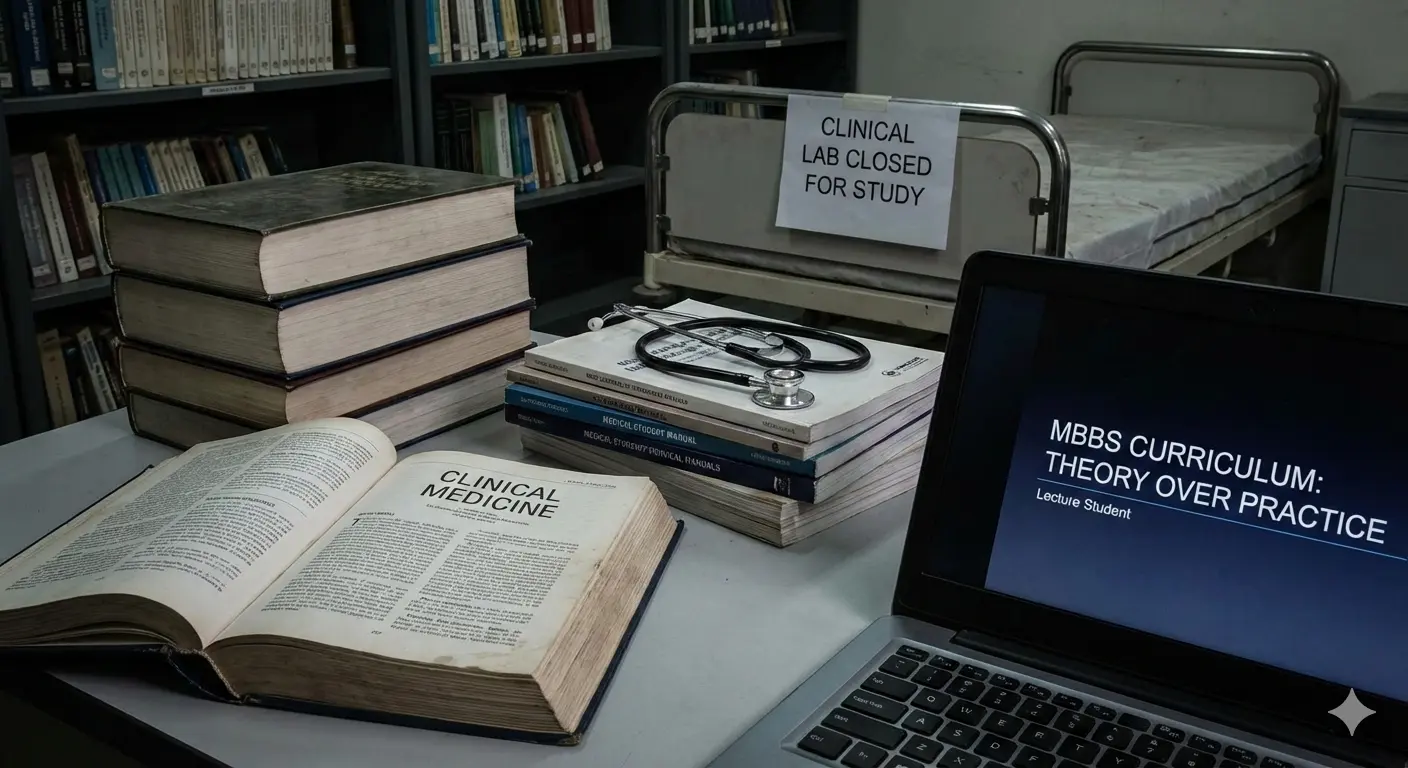
No Practical Training? The Dangerous Rise of MBBS Taught Through Textbooks
Imagine boarding a plane flown by a pilot who has read every manual on aerodynamics but has never actually sat in a cockpit. Would you feel safe?
This analogy is becoming uncomfortably relevant in the field of medicine. A growing concern in the global medical community is the rise of medical colleges offering MBBS degrees with insufficient practical training. In an era where new medical institutions are mushrooming rapidly, we are facing a critical question: Are we creating competent healers, or just "Paper Doctors"?
While textbooks provide the foundation of medical knowledge, medicine itself is a contact sport. It requires touch, observation, and the ability to react to the unpredictable nature of the human body. For students considering their options, understanding the advantages of pursuing medical education abroad in countries with established clinical protocols is more important than ever.
The Gap Between Theory and Reality
The human body rarely follows the textbook. In Gray’s Anatomy, every nerve and artery is perfectly color-coded and placed. In a real operating theater, tissues are messy, anomalies are common, and "textbook symptoms" are the exception, not the rule.
When an MBBS curriculum relies heavily on theoretical lectures and rote memorization—often due to a lack of attached teaching hospitals or patient flow—students miss out on the chaotic reality of clinical practice. This is why many students turn to established programs, such as MBBS in Russia, where government universities often possess large, attached multi-specialty hospitals.
What Students Miss Without Clinical Exposure:
- The "Art" of Diagnosis: A book can list the symptoms of pneumonia. Only listening to hundreds of chests can teach a student to distinguish a crackle from a wheeze.
- Patient Communication: Textbooks don't teach empathy, how to break bad news, or how to de-escalate an angry patient.
- Procedural Muscle Memory: You cannot learn to insert an IV line or stitch a wound by watching a video. It requires physical repetition.
Why is "Textbook-Only" MBBS Happening?
Several factors contribute to this alarming trend in medical education:
- Explosion of New Colleges: To meet the demand for doctors, many new private medical colleges have opened without established, high-volume hospitals attached to them.
- Faculty Shortages: Experienced clinical mentors are in short supply. It is easier to hire a lecturer to read slides than a senior surgeon to mentor students during rounds.
- Over-reliance on Simulation: While high-tech mannequins are excellent tools, they are not replacements for living, breathing patients with complex histories.
The Consequences: The Rise of the "Paper Doctor"
A "Paper Doctor" is a graduate who can ace every written exam but freezes when faced with a real emergency. The consequences of this training gap are severe:
- Erosion of Confidence: Graduates enter their internships or residencies paralyzed by fear, knowing they lack the skills to manage patients safely.
- Risk to Patient Safety: The learning curve that should have happened during medical school is pushed onto actual patients during the doctor's first job.
- Devaluation of the Degree: If the standard of practical training drops, the global reputation of MBBS degrees from specific regions or institutions suffers.
Bridging the Gap: The Solution
To ensure the integrity of the medical profession, we must pivot back to bedside teaching. Students and parents must research their options thoroughly. For Hindi-speaking students and parents, resources like रूस में MBBS provide vital information about curriculums that balance theory with practice.
- Mandatory Clinical Rotations: Regulatory bodies must strictly enforce minimum patient-interaction hours before graduation.
- Mentorship Programs: Senior doctors must be incentivized to take students on rounds, ensuring knowledge transfer goes beyond the classroom.
- Early Clinical Exposure: Students should be introduced to patients in their first year, not just their final year.
Conclusion
Medicine is not just a science; it is a craft. You cannot become a carpenter by reading about wood, and you cannot become a doctor by reading about diseases.
The phrase "No Practical Training, MBBS taught through textbooks" shouldn't be a description of a curriculum—it should be a warning label. For the sake of future doctors and the patients they will treat, we must demand that medical education remains deeply, undeniably human and hands-on. Platforms like New Era Education continue to highlight the importance of quality in medical training.